
Key Concepts of Bitcoin
Key Concepts of Bitcoin
- There are four key concepts that you simply got too aware in Bitcoin. These are:
- Disintermediated
- Distributed
- Decentralized
- Trustless
Disintermediated
- When you send money to someone over the net, you need a 3rd party like banks which manages all of your transactions. But in Bitcoin, you're doing transactions directly to another party over the web. This transaction takes place within the Bitcoin network.
- This network takes care of confirming and verifying that there was a real transfer useful between the 2 parties. This idea is called Disintermediated.
- The Disintermediated is that the act of removing the middleman.
- It's one among the key components that creates blockchain so valuable because it eliminates the unnecessary inefficiency that's involved once we are using a third-party during the transfer of value between parties.
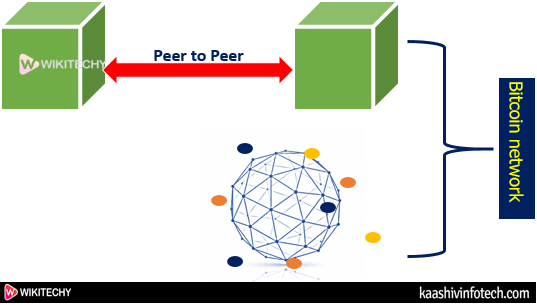
Disintermediated
Distributed
- The entire bitcoin network runs on a network of thousands of distributed computers which shares the work. So, rather than having one centralized computer which handles the workload, you're distributing it across multiple computers.
- The distributed network is more reliable because there's no single point of failure. The work is shared across thousands of computers which are all running and sharing the workload.
Read Also
Decentralized
- Bitcoin is decentralized. It means there's no central control, no central repository of data and no management within the middle that overseeing what Bitcoin does. As a result, there's no central point of failure.
Trustless
- Bitcoin is Trustless because there's no need to have a third-party, like a bank to certify and convey trust to the whole process of transactions.
- Instead, the blockchain and the way Bitcoin process the transactions enable the trust is completed by Distributed Trustless Consensus in which all the nodes agree that a transaction took place.
Bitcoin Advantages
No Third-Party Seizure
- Given that there are multiple repetitive copies of the purchases database, no-one can seize bitcoins. The foremost someone can easily do is force the buyer, by other means, to be ready to deliver the bitcoins to be ready to another person.
- This suggests which will governments can't freeze they've wealth, and thus consumers of Bitcoins will have got complete freedom to perform anything they need with the cash.
No Taxes
- There is absolutely no way for a 3rd party to intercept purchases of Bitcoins, and thus generally there's no viable approach to implement a Bitcoin taxation system. The only way to pay a replacement tax would be, within the event that somebody voluntarily sends the percentage of the number being sent as duty.
No Tracking
- Unless consumers publicize their wallet address publicly, nobody may trace transactions returning to those people.
- No one, other compared to the wallet owners, will certainly know the amount of Bitcoins these people have. Even if typically the wallet address was advertised, a fresh wallet address can easily be easily generated.
- This specific greatly increases privacy any time compared to traditional foreign currency systems, where third events potentially have access so as to personal financial data.
Read Also
Simply no Transaction Costs
- Sending and receiving Bitcoins requires user to stay the Bitcoin client running and attached to other nodes. Basically, by using bitcoins users are going to be contributing so as to the network, and thus sharing the responsibility of permitting transactions. Sharing this function greatly reduces transaction expenses, and thus makes transaction costs negligible.
No Chance of "Charge-backs"
- Once Bitcoins are sent, the purchase can't be reversed. Considering that report regarding Bitcoins will probably be changed so as to the new owner, as soon because it is modified, that's impossible to go back.
- Since only the new owner has the associated private key, only he can change ownership regarding the coins. This guarantees that there's simply no risk involved when getting Bitcoins.