
Blockchain Tutorial | Blockchain Technology | Blockchain in Supply Chain
What is Blockchain ?
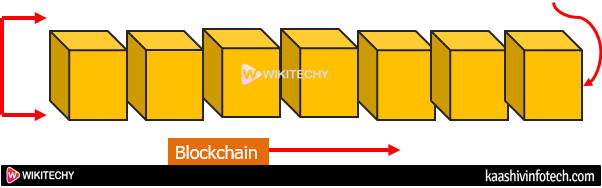
- Each “block” represents a number of transactional records, and the “chain” component links with a hash function. A blockchain is a permanent record of all the transactions that take place during a secure, chronological, and immutable way.
- Breakdown the definition,
- Immutable : It means as you build all the transaction onto the blockchain, this ledger can never be changed
- Ledger : It's a file that's constantly growing.
- Secure : Blockchain placed information during a secure way. It uses very advanced cryptography to form sure that the information is locked inside the blockchain.
- Permanent : It means once the transaction goes inside a blockchain, you'll put up it permanently within the ledger.
- Chronological : Chronological means every transaction happens after the previous one.
- A blockchain may be a chain of blocks which contain information. Each block records all of the recent transactions, and once completed goes into the blockchain as a permanent database. Whenever a block gets completed, a new block is generated.
Read Also
Blockchain Introduction
Who uses the blockchain ?
- Blockchain technology are often integrated into multiple areas. Blockchain provides a record of any transaction.
- The first use of blockchains is as a distributed ledger for cryptocurrencies.
- It shows great promise across a good range of business applications like Banking, Finance, Government, Healthcare, Insurance, Media and Entertainment, Retail, etc.
Need of Blockchain
Need of Blockchain
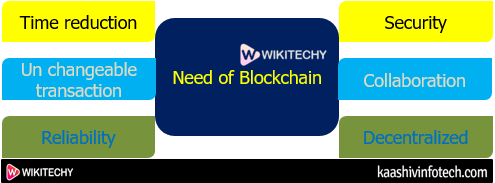
Time reduction
- Within the financial industry, blockchain can allow the quicker settlement of trades.
- It doesn't take a lengthy process for verification, settlement, and clearance. It's because of one version of agreed-upon data available between all stakeholders.
Security
- Blockchain uses very advanced cryptography to ensure that the information is locked inside the blockchain.
- It uses Distributed Ledger technology where each party holds a replica of the first chain, therefore the system remains operative, even the large number of other nodes fall.
Read Also
Unchangeable Transactions
- Blockchain register transactions during a chronological order which certifies the unalterability of all operations, means when a new block is added to the chain of ledgers, it can't be modified or removed.
Collaboration
- It allows each party to transact directly with each another without requiring a third-party intermediary.
Reliability
- Blockchain certifies and verifies the identities of every interested parties.
- This removes double records, reducing rates and accelerates transactions.
Decentralized
- It's decentralized because there's no central authority supervising anything.
- There are standards rules on how every node exchanges the blockchain information.
- This method ensures that each one transactions are validated, and every one valid transactions are added one by one.